
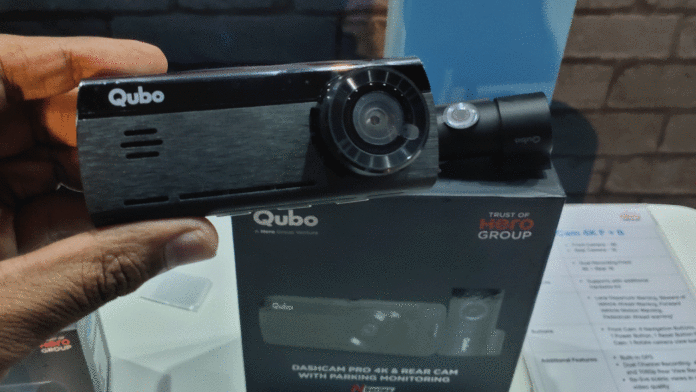
A decade ago, a dash cam was the kind of gadget only a small group of enthusiasts bothered installing, usually people who drove for a living or had a specific reason to worry about a dispute on the road. That has changed considerably. Walk through the parking lot of any big box electronics store and it’s common to spot a small lens mounted behind the rearview mirror of an ordinary sedan, not just delivery vans or rideshare cars. Prices have dropped enough that a decent unit costs less than a tank of gas, which removed one of the biggest reasons people used to skip buying one.
Part of the shift comes from how much easier these devices are to use now compared to earlier models. Older dash cams required fiddling with menus, swapping memory cards, and manually pulling footage onto a laptop after anything happened. Current models connect to a phone app, save clips automatically when they detect sudden braking or impact, and upload footage to the cloud without the driver doing much of anything. Removing that friction turned a gadget that used to feel like a hassle into something closer to a set it and forget it purchase.
What a Dash Cam Actually Proves After a Crash
Footage from one of these cameras ends up mattering most in the moments right after a crash, when memories are shaky and stories from different drivers rarely line up cleanly. A recording that shows exactly when a light changed, how fast a car was actually going, or which vehicle drifted into the wrong lane can settle a disagreement that would otherwise depend entirely on conflicting accounts. Once someone involved in that crash is actually hurt, this kind of footage stops being a minor convenience and starts playing a real role in how a personal injury claim gets built and argued.
According to www.lawyersforinjuryclaims.com, a personal injury claim generally requires showing that another driver acted carelessly and that carelessness caused the harm someone experienced, and proving that without solid evidence can turn into a frustrating back and forth between two people who each remember the same five seconds differently. Clear footage removes a lot of that guesswork, since it shows the actual sequence of events rather than a reconstructed version based on skid marks and vague recollection. Attorneys handling these cases have said that footage showing fault clearly can shorten the entire process considerably, since there’s simply less room for the other side to argue a different version of what happened.
Picking the Right Dash Cam Involves More Than Price
Picking a dash cam involves more variables than most first time buyers expect, and price alone rarely tells the full story. Resolution matters, but a camera advertised at a high resolution can still produce blurry footage at night if it has a weak sensor, which is a common gap between marketing copy and real world performance. Field of view matters just as much, since a narrow lens might miss a car that merges in from the side, leaving exactly the moment someone needed captured just outside the frame.
Mounting position and stability turn out to matter more than most buyers realize until their footage comes out shaky or partially blocked by a windshield reflection. A camera mounted too low picks up glare off the dashboard, while one mounted too high can end up partially obstructing the driver’s own view if it isn’t a slim enough unit. Reviewers who test these devices extensively tend to recommend checking sample footage from the exact model under both daylight and nighttime conditions before buying, rather than trusting a manufacturer’s specification sheet alone.
Storage and Footage Management Trip Up a Lot of Buyers
Storage tends to be the part new dash cam owners understand least going in, and it causes more disappointment down the line than any other feature. Most cameras record continuously and overwrite older footage in a loop once the memory card fills up, meaning routine driving footage from last week is almost always gone by the time someone realizes they needed it. Only clips manually saved or automatically flagged by an impact sensor tend to survive that overwrite cycle, which means a card can be completely full of useless footage while the one moment that mattered got recorded over days earlier.
Also Read: Finvasia Launches jAI, a Voice-to-Voice AI Finance Buddy on jUMPP
Cloud backup has become the fix most manufacturers now push toward, letting flagged clips upload automatically over a phone’s data connection or home WiFi once the car is parked. This solves the overwrite problem but introduces a new one, since spotty cell coverage in rural areas or parking garages can delay or block an upload entirely. Buyers who drive mostly in areas with weak signal often end up relying on the physical memory card as a backup anyway, checking it manually after anything unusual happens rather than trusting the cloud upload alone.
Dual Channel Cameras Are Becoming the New Standard
Dual channel systems, which record both the front and the rear of the vehicle at once, have moved from a niche option to something close to the expected standard within the past couple of years. A rear facing camera catches details a front facing lens simply cannot, like a vehicle that rear ends someone at a stoplight or a hit and run that happens while a car is parked. Buyers who only considered single camera setups a few years back are now often surprised by how much a rear channel adds for a relatively small increase in price.
Some newer systems have added a third channel aimed at the cabin itself, originally marketed toward rideshare drivers who wanted a record of what happened inside the car. That interior view has found a wider audience than expected, since it can clarify details in a dispute that has nothing to do with another vehicle at all, like confirming who was actually driving at the time of an incident. Reviewers testing these three channel setups note that the extra footage rarely gets used, but on the occasions it does, it tends to matter quite a bit.
A Small Gadget With an Outsized Job
A dash cam remains a small, unassuming piece of hardware tucked behind a rearview mirror, easy to forget about until the exact moment it becomes essential. Its job isn’t glamorous and most owners go years without ever needing the footage it quietly records every single day. What has changed is a growing recognition that this small gadget can carry outsized weight in a dispute that might otherwise come down to nothing more than two conflicting versions of the same five seconds on the road.

