Home Blog Page 30

Demystifying Machine Learning: A Guide for Beginners

Machine learning, a subset of artificial intelligence, has been the buzzword in recent years. But what is it, exactly? In this guide, we’ll break down the basics of machine learning, explore its diverse applications, and provide a roadmap to navigate this ever-evolving field.

What is Machine Learning?

At its core, machine learning enables computers to learn and make decisions without explicit human intervention. This is achieved through algorithms that analyze and identify patterns in vast amounts of data. These algorithms then make predictions and improve their accuracy over time, as they acquire more data.

The Role of Data

Data plays an integral role in the success of machine learning projects. High-quality, carefully preprocessed data allows the algorithms to train more effectively and produce better, more accurate results. Gathering, cleaning, and preparing data are often time-consuming steps in the machine learning process, but it is crucial to invest time and resources in this phase to ensure successful outcomes.

Customer Service and AI Chatbots

Another notable application of machine learning is in the implementation of sophisticated chatbot systems, which businesses are increasingly using to enhance customer service. Chatbots leverage natural language processing, as well as tools for sentiment analysis, to better understand and respond to customer inquiries, revolutionizing the way companies interact with their clients.

Machine Learning in the Job Market

As machine learning continues to advance, the demand for skilled professionals in this field is growing rapidly. Companies in various industries are seeking data scientists, machine learning engineers, and AI researchers to develop and implement cutting-edge solutions. Pursuing a career in machine learning can lead to lucrative job opportunities and immense potential for personal and professional growth.

Challenges and Limitations

Machine learning techniques often face various challenges and limitations that should be considered when developing and deploying models. For instance, overfitting occurs when an algorithm is too complex and performs exceptionally well on the training data but fails on new data. Additionally, issues such as bias and lack of diversity in training data can lead to biased or unfair outcomes. To mitigate these issues, developers must use strategies such as cross-validation, regularization, and diverse data sourcing.

Real-World Applications

Machine learning has an abundance of real-world applications, from finance to healthcare. Here are just a few examples:

  • Email Filtering: Machine learning algorithms analyze incoming emails and classify them as spam or legitimate based on various factors such as keywords, attachments, and sender information.
  • Healthcare: Machine learning aids in tasks such as cancer detection, drug discovery, and patient data analysis, improving healthcare outcomes.
  • Recommendation Systems: E-commerce websites and streaming services use machine learning to analyze customer preferences and deliver personalized recommendations, enhancing user experience.
  • Autonomous Vehicles: Self-driving cars rely on machine learning algorithms to navigate roads, respond to their environment, and make real-time decisions.

The Learning Types

Machine learning can be classified into three main learning types: supervised, unsupervised, and reinforcement learning. Each type serves a distinct purpose and has its own set of techniques.

Supervised learning is the most common learning type, where the algorithm is trained on a labeled dataset, i.e., a dataset with both input and output data. The algorithm learns to map inputs to their corresponding outputs, allowing it to make predictions on new data. With unsupervised learning, the algorithm is not fed any output data. Instead, it identifies patterns and structures within the input data by itself, often by clustering or finding hidden patterns. For reinforcement learning, an agent interacts with its environment and learns to make optimal decisions based on trial and error, receiving reward or punishment signals as feedback.

Popular Algorithms

There are countless machine learning algorithms available, each with its own strengths, weaknesses, and applications. Here are some of the most popular ones:

  • Linear Regression: Used for prediction in supervised learning, Linear Regression aims to find the best-fitting line between input and output data points.
  • Decision Trees: These are simple yet powerful algorithms for classification and regression tasks. Decision Trees break down the data into branches based on specific decision rules.
  • Support Vector Machines (SVM): SVMs are algorithms that excel at classification tasks. They work to find the optimal boundary between different classes of data points.
  • Neural Networks: Inspired by the human brain, artificial neural networks consist of interconnected nodes that process and transmit information. They are highly versatile and particularly proficient in tasks such as image and speech recognition.

Getting Started

If you’re interested in diving into the world of machine learning, there are some steps you can take to start learning. Familiarize yourself with the concepts of computer science, mathematics, and statistics, as these are fundamental to machine learning. It can also help to learn a programming language. Knowledge of programming languages such as Python or R will be necessary to implement machine learning algorithms and work with datasets. Numerous online resources include free courses, tutorials, and research papers to get you started. Websites such as Coursera, edX, and YouTube offer comprehensive courses on Machine Learning. Apply your newfound knowledge to real-world projects to build up your experience and create a solid portfolio.

Conclusion

Machine learning is revolutionizing countless industries and opens a world of opportunities for those who master its concepts. By getting acquainted with the basics, understanding its applications, and remaining committed to learning, you can open the door to an exciting and fulfilling journey through the realm of artificial intelligence.

The Future of Radiology With AI and Machine Learning

Technological advancements have greatly transformed the field of healthcare, and among these, artificial intelligence (AI) and machine learning (ML) are garnering significant attention. In the realm of radiology, AI and ML have the potential to revolutionize medical imaging and diagnostics processes. In this article, we will explore the core applications and benefits of incorporating AI and ML into the radiology landscape.

Enhanced Analysis and Treatment

AI algorithms can analyze medical images far more efficiently and accurately than traditional methods. This increases the likelihood of early detection of diseases and abnormalities, enabling timely treatment. AI-powered tools can also detect patterns that are not easily discernible by the human eye, allowing for a more comprehensive understanding of patients’ conditions. One such application includes the use of a spine MRI, which offers accurate and detailed images of spinal structures, helping in early diagnosis and tailored treatment.

AI-driven diagnostics can provide a wealth of insights and data, which can then be used to tailor personalized treatment plans for patients. By analyzing medical imaging in conjunction with other patient data, customized treatment strategies can be designed with a high level of precision, leading to better patient outcomes and improved healthcare efficiency.

Streamlined Workflow

Integrating AI and ML into radiology departments streamlines the workflow considerably. By automating repetitive and time-consuming tasks, radiologists can redirect their focus toward more complex diagnostics, patient care, and research. Furthermore, machine learning algorithms can intelligently prioritize cases based on urgency, ensuring that critical patients receive immediate attention.

Reducing Radiation Exposure

AI-based algorithms offer the potential to decrease the number of imaging scans needed by improving the quality and accuracy of images captured. This could lead to a reduction in patient exposure to ionizing radiation. Furthermore, by optimizing the acquisition parameters, AI systems could potentially maintain high image quality while reducing overall radiation dose.

Collaboration Between AI and Human Experts

AI and ML can complement the expertise of radiologists in making more informed decisions. By sparing radiologists with the time-consuming task of image interpretation, they can focus on the integration of clinical, imaging, and laboratory data. This collaboration between human expertise and machine intelligence will result in better decision-making and overall improvements in patient care.

AI and ML technologies can support the education and professional development of radiologists. For instance, virtual, AI-driven training programs and simulations can help radiologists master new techniques and technologies rapidly, reducing the learning curve and boosting clinical expertise. By incorporating AI-generated anonymized case studies, radiologists can learn from real-life examples and strengthen their diagnostic skills.

Overcoming the Challenge of Data Privacy

One of the primary roadblocks in integrating AI and ML into radiology is the need to protect sensitive patient data. By using federated learning, AI models can be developed and refined without transferring patient data between different institutions. This approach enables multiple facilities to contribute to the AI model while complying with strict data privacy regulations.

Continual Evolution and Improvement

Machine learning systems can improve over time, constantly enhancing their capabilities and performance. This continuous evolution can lead to progressively more accurate diagnoses, streamlined radiology workflows, and the development of new diagnostic methods and techniques. The medical community will benefit greatly from a technology that keeps pace with the rapidly changing landscape of healthcare.

Integrating AI and ML into radiology has the potential to standardize and improve the quality of diagnostic practices across different healthcare facilities. By reducing variability in image interpretation and diagnoses, AI-driven systems can help maintain a high standard of quality in medical imaging, leading to more consistent and reliable results for patients and healthcare providers alike.

Conclusion

AI and machine learning hold great promise for the future of radiology. By enhancing image analysis, streamlining workflow, personalizing treatment plans, reducing radiation exposure, and assisting in training and education, these technologies can reshape the way radiologists diagnose and manage diseases. By overcoming data privacy challenges, the adoption of AI and ML in medical imaging can vastly improve patient outcomes and bring about significant advancements in healthcare services.

New PLAYFIT Flaunt 2 And Dial 3 Pro Watches Launch With AMOLED Display

Play the Smart watch maker released two new products in the United States. PLAYFIT Flaunt 2 And Dial 3 Pro are the brand-new releases.

The new products will be available for purchase on Flipkart and the company’s website beginning on August 14. The PLAYFIT Flaunt 2 comes in two different colors (black and grey) and can be purchased at the discounted launch price of Rs 1,999. The PLAYFIT Dial 3 Pro, on the other hand, comes in three different colors (black, blue, and grey) and has a special launch price of Rs 1,499.

The new timepieces attempt to satisfy the ever-changing tastes of ‘Gen Z’ while still being stylish. The new gadgets have superior battery life, cutting-edge functions, and facilitate fitness monitoring.

The newest generation of super AMOLED found in the PLAYFIT Flaunt 2 ensures brilliant readability even in direct sunlight, with 600 nits of brightness. You can avoid having to keep waking up the screen on your watch by using the ‘Always On Display’ function.

The battery of the Flaunt 2 is capable of supporting both smart charging and rapid charging, and it has a backup time of 7 days. The smartwatch’s rotating crown button makes it easy to cycle through content, and it also allows users to set their own screensavers and navigate.

PLAYFIT Flaunt 2 And Dial 3 Pro are newest wristwatch with features of music playing and phone conversations with a great audio experience thanks to its Enhanced Bass, Extra Loud (EBEL) drivers. The company’s new watch has several sophisticated health-tracking capabilities since the company’s primary emphasis is towards a fitness-filled lifestyle. Tracking blood oxygen levels (SpO2), measuring blood pressure, keeping tabs on how well you sleep, and keeping tabs on your heart rate are just a few examples.

More than 100 training modes, breathing exercises, water reminders, and a Female Health Tracker are all supported by the PLAYFIT Flaunt 2 And Dial 3 Pro. There’s even a way to call for help in an emergency and strict privacy settings. The watch is also IP68 dust and water resistant and has a built-in voice assistant and real-time alerts.

The PLAYFIT Flaunt 2 And Dial 3 Pro, Play’s other recent product release, has a massive 2-inch all-view IPS screen. For the first time, the smartphone boasts a battery life of more than 7 days and a selection of “cloud faces”.

The PLAYFIT Flaunt 2 And Dial 3 Pro, like the Flaunt 2, incorporates a single processor that handles data processing, calls, a voice assistant, and Bluetooth communications. The watch also provides a phone-free music experience, making it ideal for the busy modern person. Dial 3 Pro is a great accessory for individuals who want to lead an active lifestyle by monitoring vital signs including SPO2 levels, blood pressure, and pulse rate. The newest edition meets the need for style and practicality in today’s market.

The new smartwatches come pre-integrated with the universal PLAYFIT companion app, much like their predecessors. The smart companion software enables the smooth transfer of data between PLAYFIT smartwatches of different generations and between smartphones of different generations. The auxiliary app may be downloaded from the App Store or the Google Play.

As a company, PLAY has always been driven by a dedication to our clients’ dreams and cutting-edge technology. According to Hamish Patel, Play Design Labs’ Chief Product Officer, “with the launch of PLAYFIT FLAUNT2 and PLAYFIT DIAL3 PRO, we continue to extract the best from commercially available latest technology”.

These smartwatches are proof positive of our prediction that Indian customers would value style, utility, and health. We are also pleased to reaffirm, on the occasion of Independence Day, that PLAY goods are created, developed, and manufactured in India,” Patel said.

How to Create Organizational Chart in EdrawMind?

Every company is made up of different departments, positions, and teams. Not keeping track of all this can result in chaos, leading to confusion about who does what and where. 

One valuable tool that helps in visualizing the hierarchy within a company is an organizational (org) chart. It visually represents the hierarchical structure of a company and shows the relationships between positions, reporting lines, etc. 

While you can create an org chart by hand, the process becomes even easier with EdrawMind – a software specifically designed for designing org charts. It comes with all the tools to create an org chart and offers multiple formats to save your work seamlessly. 

In the following guide, let’s delve deeper into org charts and how to create one easily with EdrawMind. Let’s get started! 

Key Elements of an Organizational Chart

Let’s explore some of the key elements of an org chart. 

Hierarchical Structure Showing Relationships between Positions

At the heart of every org chart is its hierarchical structure that shows the chain of command from top to bottom. This way, the chart begins with the highest authority (the CEO, HOD, or the president) and goes to the bottom of the job position. 

Throughout the flow, the chart shows various departments, units, and teams working within the company. So, one look at the chart can give you a clear understanding of authority and accountability throughout the organization.

Depiction of Roles, Responsibilities, and Reporting Relationships

Another key element of an org chart is to define the roles and responsibilities of each position within the organization. Such a structure avoids any mess and helps employees understand their place in the company. This also makes it easier to know whom one should report to and who reports to them so that nothing goes out of order. 

Division of Labor and Span of Control

The org chart visually represents the division of labor by showing various roles and functions within the organization. This division means each employee has specific expertise and is responsible for particular tasks. 

Keeping all this in one view enhances efficiency and productivity as the chart tells who controls who (for instance, the number of subordinates a manager or supervisor oversees). 

Identification of Management Levels and Leadership Hierarchy

An org chart provides a clear view of management levels and leadership hierarchy. As it shows the layers of authority within the organization, it helps employees to understand the chain of command and levels of management in the company. It also creates a sense of direction and accountability, as employees know who to approach for specific matters.

How to Create Organizational Chart in General?

An org chart has many benefits, from visualizing the hierarchical structure to showing relationships within an organization. Here are the three key steps to create an organizational chart in general: 

  1. Identify the Organizational Structure and Key Positions

Before you start creating the chart, first understand the organization’s structure. Make sure you have a deep knowledge of all the company’s key departments, teams, and positions. 

Include everything you want to add to the chart, such as roles and reporting relationships, from the top management level to the overall staff. Also, remember the span of control and any particular roles or functions within the organization.

  1. Choose the Type of Organizational Chart

There are different types of organizational charts, so it is important to decide which one to go for. The type of org chart will depend on the organization’s size, hierarchical complexity, and objectives. 

Let’s see the most common types of an org chart:

  • Hierarchical Chart: These are suitable for traditional, top-to-bottom organizational structures with clear reporting lines.
  • Matrix Chart: These charts are ideal for organizations with cross-functional teams and multiple reporting lines.
  • Flat Organizational Chart: These are perfect for smaller companies with a few levels of management and a decentralized structure.
  • Divisional Chart: These are perfect for large organizations with multiple branches.
  1. Add Departments, Teams, and Positions

Start by putting the highest position at the top of the chart (company president or owner). In case of multiple presidents with equal authority, make sure to include all of them up there. 

Then, slowly move to level two and add more positions, such as a manager directly reporting to the president. In a bigger company, there may be two or more vice presidents, each handling different areas like operations and sales.

After that, move on to the third level. These are the positions that report directly to the second level. Add all the employees and their positions. Interlink them with each other and state their roles. Keep going until you reach the end of the chart, where the bottom-most position should be added. 

How to Create Organizational Chart in EdrawMind?

Creating an org chart can be hectic as there are many departments, teams, and positions to add. An easy solution is to use third-party software like EdrawMind, which is specifically designed to create mind maps and charts. What’s best? It is free to use and includes all the tools to create organizational charts. 

Let’s now dive into how to create organizational charts in EdrawMind. 

  1.  Choose Your EdrawMind Option

To create an org chart in EdrawMind, you have two options: either use the EdrawMind Software on your computer or access EdrawMind online. Both options are perfect for creating org charts, but you can choose one depending on your convenience. Once done, go to New in the left sidebar and select any template.

How to Create Organizational Chart in EdrawMind? 1
  1. Customize Your Org Chart

The selected template will appear on the left pane of your computer screen. Now, you can customize the template by adding different block shapes, roles, and other elements that represent your organizational structure.

How to Create Organizational Chart in EdrawMind? 2
  1. Save and Export Your Chart

After you are done with your chart, it’s time to save and share it. EdrawMind offers various export formats, such as MS Office, PDF, PS, and Graphs. Choose your preferred format and save your org chart. 

How to Create Organizational Chart in EdrawMind? 3

Conclusion

No doubt, organizational charts visualize the entire system within a company. They help you understand who does what and where, allowing you to have a quick look at the company’s hierarchy.

You can create an org chart generally, but using EdrawMind makes the process super-easy and fast. Its user-friendly interface and many tools let you easily create long, complex charts. 

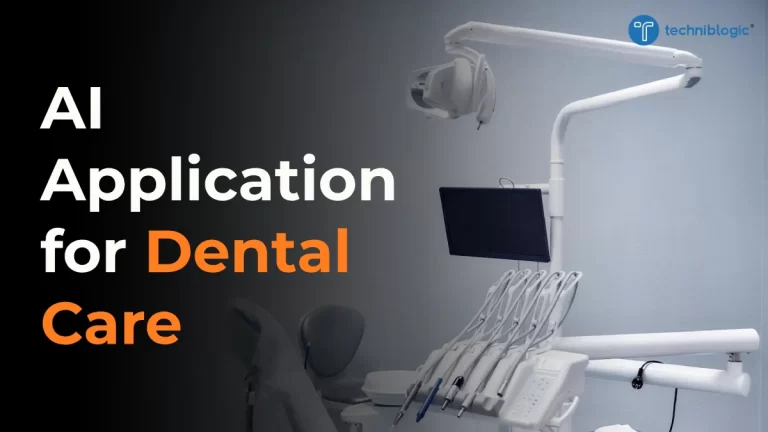
5 Cutting-Edge AI Applications That Are Revolutionizing Dental Care

Welcome to the future of dentistry, where artificial intelligence (AI) is paving the way for revolutionary advancements in patient care and practice management. AI is no longer a concept from science fiction but a tangible reality reshaping the landscape of dental healthcare. From streamlining diagnostics to enhancing treatment planning, AI is empowering dentists to deliver more accurate, efficient, and personalized care to their patients.

These innovations are revolutionizing the dental industry by not only improving treatment outcomes but also enhancing patient experiences. Whether you’re a dentist planning to open a practice or a new hygenist in the industry, you can dive into the exciting world of AI-powered dentistry and discover how these groundbreaking technologies are reshaping the future of dental care. Here are five cutting-edge applications of AI in dentistry that are transforming the way dental professionals work. 

Image Analysis

Traditional radiographs and intraoral images have long been essential tools in dentistry for diagnosing oral conditions. But the manual analysis of these images can be time-consuming and prone to human error. AI-driven image analysis employs sophisticated algorithms to swiftly and accurately detect abnormalities, cavities, and periodontal diseases from X-rays and intraoral scans.

These AI systems can quickly process large amounts of data and flag potential issues that might have been overlooked by human eyes. By providing dentists with more precise diagnostic insights, they can catch problems at an early stage, enabling prompt interventions and better treatment outcomes for patients. With the right AI-powered software, dental offices can use a secure database and enterprise search to easily navigate through and analyze images and other patient data. 

Virtual Treatment Planning

AI-powered virtual treatment planning tools are revolutionizing how dentists approach complex cases. These platforms combine patient data, diagnostic images, and historical treatment outcomes to create personalized treatment plans and simulations. Dentists can now visualize the potential results of different treatment options before actually performing them on the patient.

This not only improves treatment predictability but also enhances patient communication. Dentists can present comprehensive treatment plans, including before-and-after visualizations, to help patients understand their options better and actively participate in decision-making. Virtual treatment planning also streamlines communication between dentists and dental laboratories.

The digital models generated by AI algorithms can be seamlessly shared with dental technicians, eliminating the need for physical impressions and reducing the chances of errors during the fabrication process. This efficient communication between dental professionals contributes to the overall success of the treatment and ensures that the final restorations meet the patient’s unique needs.

Personalized Patient Care

AI is reshaping patient care by using predictive analytics to identify patterns and trends in patient data. By analyzing historical patient records and treatment outcomes, AI algorithms can predict potential oral health issues for individual patients and recommend proactive interventions to prevent them.

It can also assist in personalized treatment recommendations based on a patient’s unique characteristics, including age, medical history, and lifestyle factors. This tailored approach to patient care not only improves treatment efficacy but also helps create stronger patient-dentist relationships.

Automated Patient Communication

Managing patient communication and appointment scheduling can be time-consuming for dental practices. This is especially true when staffing shortages are so prevalent in the healthcare industry. But AI-powered chatbots and virtual assistants are transforming this process by automating patient communication and appointment bookings.

These AI-driven systems can handle routine inquiries, appointment reminders, and rescheduling requests, freeing up dental staff to focus on more critical tasks and potentially reducing labor costs. Patients can benefit from improved accessibility and seamless communication, leading to increased patient satisfaction and retention. 

Enhanced Robotic Dentistry

Robot-assisted dentistry is another groundbreaking application of AI in the dental field. Robots equipped with advanced AI algorithms can perform highly precise and repetitive dental procedures, like tooth preparation for crowns and implants. These robotic systems work in collaboration with dentists, enhancing their capabilities and allowing for exceptional precision during complex dental procedures.

One of the key advantages of AI-enhanced robotic dentistry lies in its ability to minimize human error. Despite dentists’ expertise and steady hands, even the most skilled professionals can experience minor deviations during intricate procedures.

Robotic systems, on the other hand, have the capability to perform with unmatched precision, ensuring that the final result aligns flawlessly with the treatment plan. The result is faster and more accurate treatment delivery, which leads to reduced chair time and improved treatment outcomes.

Final Thoughts 

As the world of dentistry continues to embrace AI technologies, the potential for transformative change in patient care and practice efficiency is massive. From improved diagnostics and treatment planning to personalized patient care and robotic assistance, AI is revolutionizing the way dental professionals work and the quality of care they provide.

Embracing these cutting-edge AI applications allows dentists to stay at the forefront of the dental industry, offering their patients the best possible care with enhanced precision and effectiveness. By embracing the power of AI, dentists can build a more efficient and patient-centered practice, setting new standards for dental care in the AI-powered future.

Why IT Support Is Important to Businesses of All Sizes

IT support is indispensable to businesses of all sizes. A well-functioning IT system saves time, increases productivity, and boosts customer satisfaction.

IT professionals require strong verbal communication skills as they must frequently speak to in-house customers and employees. Read the following article to learn more about what they can bring to the table.

Streamlined Operations

With professional IT services, businesses can reduce time and costs associated with implementing and supporting modern technology and systems, freeing them up to focus their limited resources on revenue-generating activities for their business while leaving IT infrastructure management to experts.

Tech services use a pay-as-you-go pricing model, giving small enterprises all the benefits of having an in-house IT team without incurring full-time salary costs and related overhead expenses. They work proactively to avoid issues and rapidly resolve them when they do arise; plus, they allow enterprises to scale up or down depending on business requirements.

Tech support is an integral component of business operations, helping keep systems operational while giving employees access to tools they need for productivity. IT protection helps guard valuable information against cyber-attacks that could otherwise compromise data and cause downtime and costly breaches.

Professional tech teams utilize various communication channels to ensure all employees can easily reach a rep, such as phones, email, SMS, and chatbots. These communications provide regular reports on system statuses such as cost for maintenance/upgrades/backup status.

Most issues with IT systems can be solved remotely; however, when there is a hardware issue requiring physical access or additional technical expertise, an IT team will send out a technician. This may take place either live, attended sessions or remotely controlled system control sessions – either way there should be clear communication on what work is being performed and when this session will conclude.

Improved Security

Small businesses rarely have the resources or budget available to them to hire an in-house IT team, so tech solutions offer an ideal way to gain the expertise you require without exhausting all your funds. Such options may include help desks that can be reached through multiple communication channels; online tutorials or chatbots; phone services and software that allows a technician to remotely connect to and troubleshoot issues on your computer remotely.

Tech support can also assist businesses with keeping pace with modern customer expectations and meeting compliance standards, including those set forth by GDPR regulations. Such expectations often involve providing customer service without interruption, protecting confidential data, and complying with any necessary regulations – something tech support services can assist with effectively.

An IT provider can assist in meeting these goals by training employees, setting up and monitoring backups, deploying firewalls, updating security patches as necessary, controlling access to software devices and data, and creating a secure work environment.

With digital transformation and remote and mobile workplaces becoming increasingly prevalent, IT teams must be equipped to rapidly accommodate changes. A reliable tech team can ensure that remote and on-premises technologies are properly integrated; documents are accessible; and access is granted only to those who require it – something especially essential in companies experiencing rapid expansion and growth.

Reduced Downtime

If your business relies heavily on technology, any downtime could cost it revenue. That is why investing in tech services to minimize downtime as much as possible is critical; IT professionals can quickly fix any problems and restore systems back online quickly to save both time and money.

Tech services can also prevent data breaches by installing antivirus software, setting up firewalls and making regular backups of digital files. Such measures will keep your information safe while protecting employees from accidentally downloading viruses or malware – as well as protecting customer personal data and building an excellent reputation with potential new clients.

IT support providers can make your business more efficient by implementing IT solutions that automate and streamline processes. For instance, they could implement chatbots that answer common customer service inquiries, freeing up customer service staff to focus on more complicated matters.

Tech support can also boost productivity by decreasing employee time spent on noncritical tasks. For example, if they are having difficulty using certain software platforms, tech support could send someone familiar with that software platform to resolve it and save your team members valuable work hours otherwise spent trying to figure out how they work or dealing with customer support for that system.

Tech support services can also help reduce costs by eliminating the need to hire in-house professionals. Hiring full-time professionals can be expensive when factoring in salaries, benefits, and office upkeep expenses. In contrast, IT Support services offer flexible payment plans and on-site support that cater specifically to meet your needs, so you pay only for what services are required instead of paying an hourly or fixed monthly fee for an entire team. This is something that is obviously especially helpful for small businesses with tight budgets.

it support

Increased Productivity

Professional IT support offers many services that can make your business run more efficiently, such as setting up new servers, installing software updates and security patches, performing routine hardware maintenance checks, providing remote support services for end-user issues such as slow computer or printer performance, software errors, network connectivity issues or anything else related to IT systems – among other tasks.

Employing tech support professionals can also save your employee’s valuable time. Their experts possess knowledge in various software platforms and know how to quickly solve technical issues, so your employees can focus on more productive tasks instead of learning unfamiliar software or waiting on customer service representatives to respond.

Tech support services provide various communication channels for employees and customers to use, including telephones, emails, social media messaging services such as Twitter or LiveChat. This makes communication between you and customers much simpler while decreasing the likelihood of dissatisfaction with products or services you offer.

Tech support services can assist your company in improving data insights and analytics to enable more informed business decisions. An IT support team can assist with selecting hardware and software systems to take your company to the next level of performance and scalability while also implementing programs, procedures, and cybersecurity strategies to boost security and productivity.

iPhone 15 Pro most exciting new Feature

Multiple reliable sources have informed us that some, if not all, iPhone 15 Pro models will see price increases from Apple this year. Following a survey that asked whether readers would be prepared to pay a higher price for the iPhone 15 Pro, we now want to know what additional feature would encourage you to spend extra for the new phones, which are anticipated to be introduced in the middle of September.

iPhone 15 Pro may get more expensive

In an earlier piece, I stated that the iPhone’s pricing has been relatively constant throughout the years. In 2017, with the release of the iPhone X, Apple established a new base pricing for its premium smartphone, charging $999 instead of the typical $649. Pricing for high-end smartphones like the Samsung Galaxy S Ultra and Apple’s iPhone Pro has converged around $999.

The iPhone’s pricing may soon be adjusted once again by Apple. Bloomberg predicted earlier this year that the iPhone 15 Pro and iPhone 15 Pro Max would cost more than its forerunners, but the iPhone 15 and iPhone 15 Plus would be priced similarly.

Barclays analyst Tim Long recently predicted in a letter to investors that the iPhone 15 Pro series might see a price increase of $200. It’s possible that Apple may raise the base price of the iPhone 15 Pro Max from $1,099 to $1,299.

As with the iPhone X several years ago, Apple is likely aware that many customers would be dissatisfied with a price hike and will push major new features to persuade them that the increased price comes with numerous improvements. The iPhone 15 Pro won’t be a substantial update, but there will reportedly be significant changes.

What iPhone 15 Pro rumors say

There is no one feature that would convince me to pay more for an upgrade, but rather a mix of improvements in functionality and aesthetics. For instance, I was sold on the iPhone 7 since it was superficially similar to the iPhone 6S, but it contained several minor upgrades and a brand-new production method for its jet-black variant.

If the iPhone’s design improves again, I’ll gladly shell out the extra cash. An all-screen display with no bezels or a dynamic island is expected for the next several iPhones, which may also include a folding iPhone, a bigger display, a radically different form factor, or some other innovation. To me, these renderings and rumors point to what seems to be an iPhone 12S Plus Pro Max. Classical repetition.

The next generation of the iPhone Pro is said to have rounded corners and less side bezels. It has been said that a titanium frame will replace the current stainless steel one, making the phone both stronger and more portable.

The switch from Lightning to the newer and more versatile USB-C port on this year’s iPhones is sure to be a major selling feature. Additionally, Apple has been developing a new periscope lens for the iPhone 15 Pro Max, which will allow for even better optical zoom. The new A17 processor, which is both quicker and more energy efficient, will be used in both Pro variants.

Since 128 GB of storage is insufficient for things like 4K ProRes video, speculations have circulated that Apple would boost the standard storage from 128 GB to 256 GB.

What would convince you to pay more for the new iPhone 15 Pro?

So, if Apple is really planning to increase the price of the iPhone 15 Pro, what would be the deciding factor for you to shell over the additional funds? Please vote in the poll and share your thoughts in the comments section below.

PVR Inox’s Standalone IMAX Experience New Launches in Delhi’s Priya Cinema

PVR Inox, India’s largest cinema chain, has opened the country’s first . The business has renovated the Priya Cinema in Delhi’s Basant Lok Complex, Vasant Vihar, updating it to provide patrons with a “ultra-modern,” IMAX Laser-projected, multi-screen experience.

This is the first movie theater in the nation devoted only to showing IMAX films; other IMAX theaters in the country also show standard theater formats and projections. The theater is one of the oldest in the PVR chain and has a single screen with 316 seats with ticket rates ranging from Rs.400 to Rs.1000.

Ajay Bijli, Managing Director, PVR INOX Ltd., said in a prepared statement, “We are extremely pleased to upgrade our first and most iconic cinema, PVR Priya into a modern-day representation of a truly immersive cinematic experience like IMAX.” With its larger-than-life allure and immersive formats like IMAX, Hollywood and other Indian films that aren’t dubbed into English have successfully expanded the global audience for motion pictures. The recent “Barbenheimer” movie festival, which helped Indian theaters make money despite competition from streaming services, is the obvious example here. Revenue increased dramatically in July, when three huge Hollywood blockbusters—Mission: Impossible—Dead Reckoning, Part One; Barbie; and Oppenheimer—hit theaters all at once.

The most recent one topped the charts in India, grossing over 100 crores, with many people flocking to IMAX theaters to see it the way ‘Christopher Nolan meant it.’ Both the Tom Cruise action flick and the one he stars in have been given the IMAX treatment, and both are presently showing at Delhi’s Priya Cinema.

However, the current Hollywood actors’ and writers’ strike has stalled major projects, making it impossible for PVR Inox to keep the company operating without a steady stream of IMAX size movies to screen at regular intervals. Even Dune: Part 2, which was supposed to be out in November with an IMAX emphasis, could not come out until 2024 if its celebrity ensemble is unable to conduct any promotion or interviews.

Priya Cinemas will be compelled to screen non-IMAX pictures, which is technically against its advertising, unless more local, Indian movies come forward to shoot in IMAX during the Hollywood lull. In a recent interview, PVR Inox managing director Bijli affirmed as much, saying that until Hollywood studios and the actors’ and writers’ unions come to a fair arrangement, there would be a lot of that.

Because shooting with regular 2K cameras is so much more affordable, the vast majority of Indian productions use them. Rich Gelfond, CEO of IMAX, said in a press release that the company is “pleased to further partner with PVR INOX to meet surging demand for The IMAX Experience” in India. Gelfond attributed the country’s rapid rise to the enthusiasm of its audiences and their enthusiasm for both Indian and Hollywood filmmaking.

Once the ‘Barbenheimer’ mania dies down, movie theaters throughout the globe will face a scenario like to the epidemic period, when audiences stayed at home to avoid becoming sick. Spider-Man: Into the Spider-Verse is a big participant in this change since its performers are unable to conduct any voiceover work during the strike. Kraven the Hunter, meantime, has been pushed back from its original October release date to August of 2024.

New Nokia 130 Music, Nokia 150 2023 Launched With Upgraded Batteries

On Thursday, HMD Global—the parent company of Nokia—launched the Nokia 130 Music and the Nokia 150 in India. New versions of the phones with improved battery life have launched. The Nokia 130 Music, so the firm claims, also boasts a robust speaker. The Nokia 150 2023, like the 2020 version, has a Series 30+ operating system and a VGA back camera with a flash. The screen size of the Nokia 130 Music is 2.

Nokia 130 Music, Nokia 150 Features and Specs

The screens on each of these feature phones measure in at 2.4 inches. The Nokia 130 Music has a QVGA display and a touch keypad. Both phones have batteries that are bigger than the ones found in the Nokia 130 (2017) and the Nokia 150 (2020), measuring in at 1,450mAh.

The Nokia 130 Music has an MP3 player, FM radio (with wired and wireless options), and can use microSD cards up to 32GB in size. Micro USB (USB 1.1) and a 3.5mm headphone connector are included. The Finnish-made mobile phone has the capacity to hold up to 2,000 contacts and 500 text messages. The headphones within the package are wired.

The Nokia 150 (2023) has a polycarbonate casing with an IP52 certification, making it resistant to dust and splashes of water. The longer-lasting battery is said to allow for up to 34 days of standby time and 20 hours of talk time. The rear of the device has a VGA camera with an integrated flash.

Nokia 130 Music, Nokia 150 Price and Availability

The base price of the Nokia 130 Music in India is Rs. 1,849. It is available in dark blue, purple, and light gold. The pricing of the Light Gold model is Rs 1,949.

The Nokia 150 (2023), meanwhile, comes in Black, Cyan, and Red. The price of the phone is shown as Rs. 2,699. Both devices will be sold through conventional channels, including the Nokia online shop and other online partners.

New Oppo A58 4G Launched With 33W SuperVOOC Charging

On Tuesday, Oppo introduced the A58 4G to the Indian market. It joins the Oppo A58 5G and the Oppo A58x 5G, both of which use the MediaTek Dimensity 700 SoC and the Mali-G57 MC2 GPU. In contrast to the 4G model, which made its debut earlier this year in Indonesia, the 5G models didn’t make their appearance until the previous year. There have been rumors that the Oppo A58 4G has been seen in India at the BIS certification facility. There is now just one storage choice and two color options for the phone in the nation.

Oppo A58 4G features and Specs

The Oppo A58 4G has a 6.72-inch, full-HD+ (2,400 by 1,080 pixel), 90-hertz display powered by a MediaTek Helio G85 system-on-chip and a Mali G52 MC2 GPU. ColorOS 13.1, based on Android 13, is preinstalled, much as on the Indonesian version.

The main sensor of the Oppo A58 4G’s dual back camera unit is 50 megapixels, with a secondary sensor of 2 megapixels for depth perception and depth mapping. Front camera sensor is located in a centered hole-punch slot, while the rear cameras and LED flash unit are housed in vertically organized twin circular rings on the top left corner of the rear panel.

The battery in the Oppo A58 4G is 5,000 mAh and supports 33W wired SuperVOOC rapid charging. The phone has a fingerprint scanner on the side for further security. The device has a variety of connection options, including USB Type-C, GPS, NFC, and Bluetooth v5.3. A 3.5mm headphone jack is included. The device weighs 192 grams and has dimensions of 165.65 x 75.98 x 7.99 millimeters.

Oppo A58 4G Price and Availability

The only configuration of the Oppo A58 4G is 6GB + 128GB, and it costs Rs. 14,999. It comes in both Black and Green hues. The phone can be purchased from Flipkart for as little as Rs. 5,000 with interest-free monthly installments. Additional savings and perks are available to cardholders of participating banks including ICICI, HDFC, and Kotak Bank.

Samsung Galaxy F34 5G Launch With 6.5-inch FHD+ 120Hz AMOLED Display

The Samsung Galaxy F34 5G, the company’s newest F series smartphone, was released in India today. The Samsung Galaxy F34 5G is a 5G smartphone featuring a 6.46-inch Full High Definition 120 Hertz (FHD+) Super AMOLED display, an Exynos 1280 system-on-chip (SoC), up to 8GB of RAM, 128GB of internal storage, a 50+8+2 megapixel camera, a 13 megapixel front-facing camera, and a 6000 mAh battery. Prices for the phone begin at Rs. 18999.

Samsung Galaxy F34 5G Features and Specs

The 6.46-inch FHD+ Super AMOLED Infinity-U Display on the Samsung Galaxy F34 5G is among its standout features. The maximum brightness of the display is 1000 nits, and the refresh rate is 120 Hz. The anti-scratch Corning Gorilla Glass 5 coating is included.

The Exynos 1280 Octa-Core 5nm CPU and Mali-G68 GPU are included in the phone. You may choose between 6GB and 8GB of RAM. The 128GB of built-in storage may be augmented by an additional 1TB via a micro SD card.

There is a 50 megapixel OIS main camera, an 8-megapixel ultra-wide angle camera, and a 2-megapixel macro camera all located on the back of the device. The front camera on this phone is rather powerful, coming in at 13 megapixels.

The Galaxy F34 5G has a fingerprint scanner in its side button. There is no 3.5mm headphone connector, although the phone does have USB Type-C audio capability. The audio is likewise high quality thanks to the inclusion of Dolby Atmos.

USB Type-C, Bluetooth 5.2, Dual-frequency GPS/ GLONASS/ Beidou, and Wi-Fi 6 802.11 fax (2.4GHz + 5GHz) round out the list of possible connections, in addition to the faster and more secure 5G SA/NSA network. The phone has a 25W rapid charging capability and a 6000mAh battery.

Weighting in at 208g, the Samsung Galaxy F34 5G comes in at 161.777.28.8mm. You can get it in both Mystic Green and Electric Black.

Samsung Galaxy F34 5G Price and Availability

5G, 128GB, Dual-Cell Samsung Galaxy F34: Rs. 18,999

Price in India for the Samsung Galaxy F34 5G 8+128GB: Rs. 20,999

Beginning on August 12, you’ll be able to purchase a Samsung Galaxy F34 5G through Flipkart, Samsung’s official website, and certain brick-and-mortar retailers. The phone may now be preordered.

New LG UltraGear OLED Gaming Monitors Launched In India

LG Electronics’ newest LG UltraGear OLED gaming displays have been released in the Indian market. With their advanced features and high performance, these screens provide a satisfying gaming experience. Two new versions, the LG 27GR95QE and LG 45GR95QE, have been released.

The LG UltraGear OLED display of the LG 27GR95QE 27-inch QHD (2560×1440) gaming monitor. It uses AGLR technology, which stands for Advanced Gaming Luminance Range, and guarantees high-quality graphics and vivid colors. The monitor’s HDR10 compatibility and DCI-P3 98.5% (Typ.) color gamut are particularly impressive, as they make it possible to see the widest range of accurate and bright colors possible. OLED Pixel Dimming is used as well for maximum contrast.

The display has an incredible 0.03ms GTG (gray-to-gray) response time and a phenomenal 240Hz refresh rate. It prevents motion blur and ghosting to make the on-screen action seem more realistic. The display is compatible with a wide variety of variable refresh rate (VRR) technologies, such as NVIDIA G-SYNC, FreeSync Premium, and VESA Adaptive-Sync. This eliminates the possibility of screen tearing when playing games.

USB 3.0 1up 2dn, DisplayPort 1.4 with Dynamic Sequence Compression x1, and HDMI 2.1 x2 are all available connections.

For maximum screen real estate and an immersive visual experience that will keep gamers engrossed, the monitor boasts a 4-Side Virtually Borderless Design.

The LG UltraGear OLED 45GR95QE is a top-notch display for video games. It has a large 45-inch OLED curved display with a resolution of 3440 by 1440 pixels and an 800R curvature. Additional features include Advanced Gaming Luminance Range (AGLR) technology for improved visibility and contrast when gaming. The display has an incredible contrast ratio of 1,500,000:1, allowing for both dark blacks and brilliant whites for superior picture clarity. Additional help in creating colors that are true to life comes from HDR10 and the DCI-P3’s 98.5% (Typ).

The monitor’s 0.03ms GTG reaction time and 240Hz refresh rate make it the fastest and most responsive option available. This monitor is also compatible with NVIDIA G-SYNC, HDMI 2.1 VRR (Adaptive Sync), and AMD FreeSync Premium. This means that gamers using either NVIDIA or AMD may play without experiencing any tearing or stuttering.

HDMI 2.1 x2, DisplayPort 1.4 with DSC x1, and USB 3.0 x1 up to 2dn are just a few of the many connections available on this device.